Most Peruvian businesses focus on offline legal protection—registering with SUNARP, securing INDECOPI trademarks, obtaining licenses. Then they discover someone else owns their business name as a domain, a competitor is using a similar name online, or their Google search results show nothing about their actual business.
The gap between legal registration and digital protection creates vulnerability. Your business might be legally protected in Peru, but if you haven’t secured your online identity, competitors can occupy the digital space you should own.
I’ve seen established businesses forced to rebrand online because they waited too long to secure digital assets. Restaurants with ten years of reputation unable to use their own name as a domain. Service businesses outranked on Google by newer competitors who understood digital positioning.
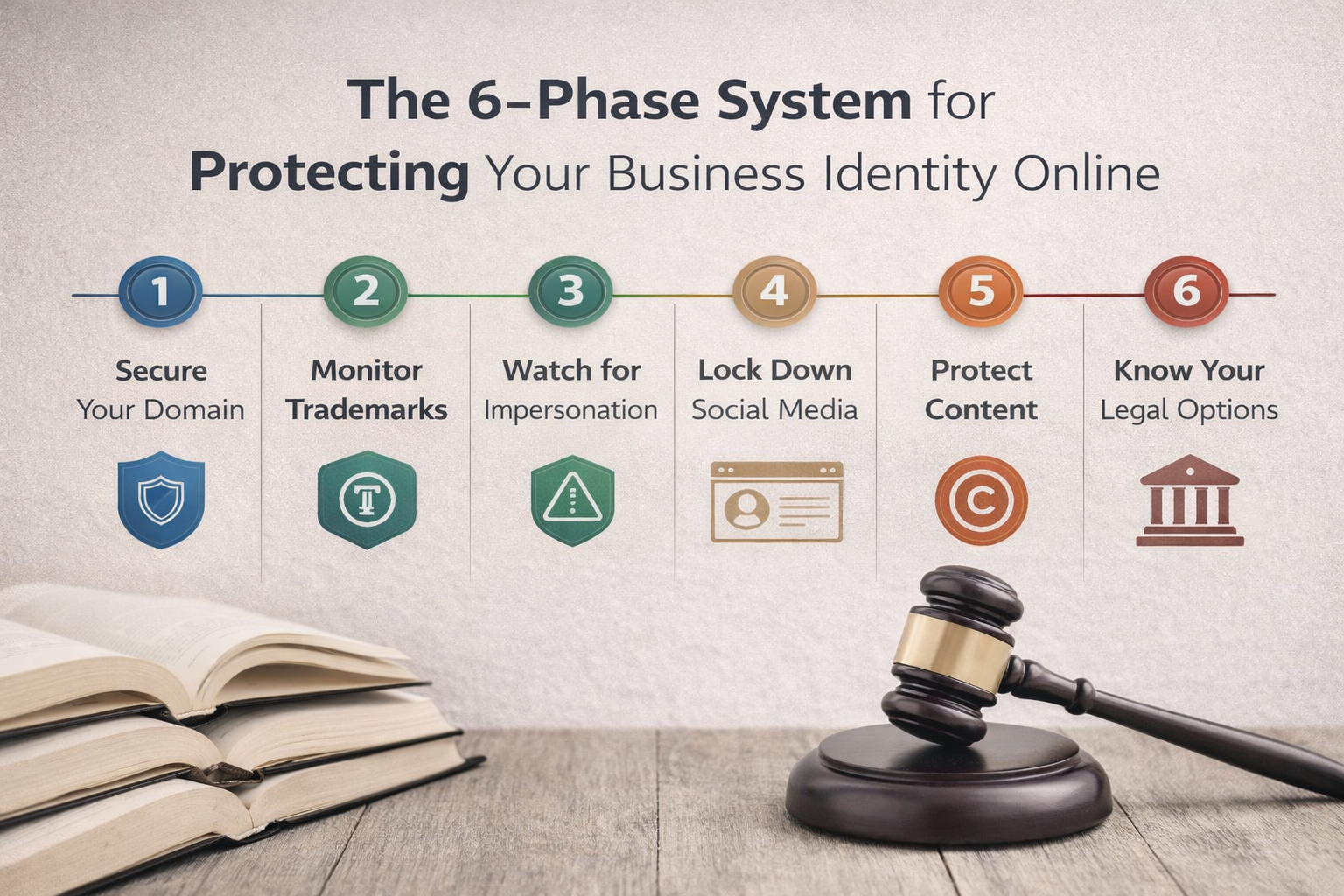
Here’s the systematic approach to protecting your business identity online while building visibility that drives commercial results.
Phase 1: Digital Identity Audit and Planning (Week 1)
Before securing anything, understand what exists and what you need to protect.
Step 1: Audit Current Digital Footprint
Search your business name on Google. What appears? Your website? Competitors? Nothing?
Check:
- First page of Google results for “[your business name]”
- Google Images results
- Social media searches (Facebook, Instagram, LinkedIn)
- Business directory listings (Google Maps, Yellow Pages Peru)
- Industry-specific platforms
Document what exists now. This baseline shows what you’re working with and what needs attention.
Step 2: Identify Digital Assets to Secure
Map what you need to protect:
Domain names: Your primary business name in .pe, .com.pe, and .com if budget allows. Also consider common misspellings.
Social media handles: @yourbusiness on platforms your customers use. In Peru, Facebook and Instagram matter most for B2C; LinkedIn for B2B.
Business listings: Google Business Profile, Apple Maps, industry directories.
Trademark protection: INDECOPI registration covers legal use, but doesn’t prevent digital squatting.
Step 3: Assess Competitive Landscape
If ten businesses share variations of your name, online differentiation becomes critical. You might have the legal name rights, but digital visibility requires extra effort when competing against name confusion.
Phase 1 Checkpoint: Digital audit complete, asset list created, competitive landscape mapped. Time: 1 week.
Phase 2: Secure Critical Digital Assets (Week 2)
With your audit complete, immediately secure the most critical assets before someone else does.
Step 1: Register Your Primary Domain
Priority order:
- [yourname].com.pe – Primary Peruvian domain
- [yourname].pe – Shorter alternative if available
- [yourname].com – International presence (optional but valuable)
Register for 3-5 years minimum. Domain registration is cheap; losing your preferred domain to competitors or squatters is expensive.
If your exact name is taken, consider:
- Adding city name: [yourname]lima.pe
- Adding industry: [yourname]legal.pe
- Using Spanish descriptors: [yourname]peru.com
Avoid numbers or hyphens—they’re hard to communicate verbally and look unprofessional.
Step 2: Claim Social Media Handles
Secure @yourcompany on:
- Facebook (essential for B2C businesses in Peru)
- Instagram (visual industries: retail, food, fashion)
- LinkedIn (B2B services, professional services)
- TikTok (if targeting younger demographics)
Even if you won’t actively use all platforms immediately, claiming the handles prevents competitors or impersonators from taking them. Recovering a handle from squatters is difficult and sometimes impossible.
Step 3: Register Google Business Profile
For any business serving customers at a physical location or within a geographic area, Google Business Profile is non-negotiable. It’s free and dramatically impacts local search visibility.
Complete every section:
- Accurate business name (must match legal registration)
- Full address and service area
- Phone number and website
- Business hours
- Services/products offered
- Photos of location, team, products
Incomplete profiles rank lower than complete ones. Invest the hour to do it properly.
Phase 2 Checkpoint: Domain registered, social handles claimed, Google Business Profile live. Time: 1 week.
Phase 3: Build Your Digital Foundation (Week 3-5)
Securing assets is defensive. Building your digital presence is offensive—actively establishing your business identity online.
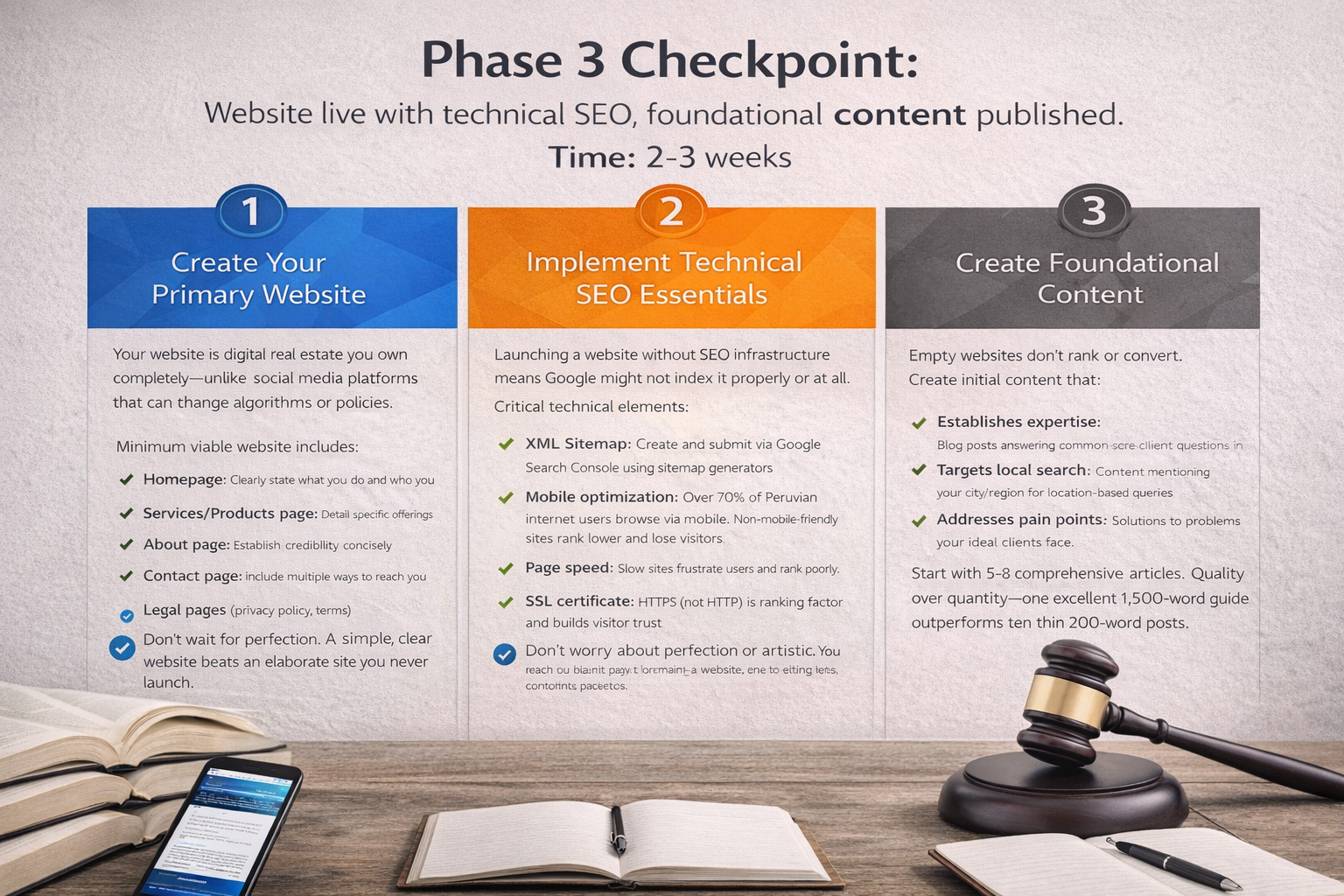
Step 1: Create Your Primary Website
Your website is digital real estate you own completely—unlike social media platforms that can change algorithms or policies.
Minimum viable website includes:
- Homepage clearly stating what you do and who you serve
- Services/Products page with specific offerings
- About page establishing credibility
- Contact page with multiple ways to reach you
- Legal pages (privacy policy, terms)
Don’t wait for perfection. A simple, clear website beats an elaborate site you never launch.
Step 2: Implement Technical SEO Essentials
Launching a website without SEO infrastructure means Google might not index it properly or at all.
Critical technical elements:
XML Sitemap: Create and submit via Google Search Console using sitemap generators. This ensures Google finds and indexes all your pages efficiently.
Mobile optimization: Over 70% of Peruvian internet users browse via mobile. Non-mobile-friendly sites rank lower and lose visitors.
Page speed: Slow sites frustrate users and rank poorly. Optimize images, use efficient hosting, minimize code bloat.
SSL certificate: HTTPS (not HTTP) is ranking factor and builds visitor trust.
Structured data: Help search engines understand your business information—location, hours, contact details.
These technical foundations take a few hours to implement but provide years of SEO benefit.
Step 3: Create Foundational Content
Empty websites don’t rank or convert. Create initial content that:
Establishes expertise: Blog posts answering common client questions in your industry
Targets local search: Content mentioning your city/region for location-based queries
Addresses pain points: Solutions to problems your ideal clients face
Start with 5-8 comprehensive articles. Quality over quantity—one excellent 1,500-word guide outperforms ten thin 200-word posts.
Phase 3 Checkpoint: Website live with technical SEO, foundational content published. Time: 2-3 weeks.
Phase 4: Establish Consistent Business Information (Week 6-7)
Inconsistent business information across platforms confuses customers and hurts SEO. Google prioritizes businesses with consistent NAP (Name, Address, Phone) everywhere.
Step 1: Standardize Your Business Information
Decide exactly how you’ll present:
- Business name (including legal suffix if applicable)
- Address format
- Phone number format
- Business description
Use this exact format everywhere. Variations confuse search engines and customers.
Example inconsistency that hurts you:
- Website says “Valcaya Legal SAC”
- Google Business says “Valcaya Legal”
- Facebook says “Valcaya Legal – Abogados Lima”
- Directory says “Valcaya Legal S.A.C.”
Pick one format, use it everywhere.
Step 2: Update All Business Listings
Submit your business to relevant directories:
- Google Business Profile (already done in Phase 2)
- Apple Maps
- Industry-specific directories
- Chamber of Commerce listings
- Yellow Pages Peru
- Professional association directories
Each listing is a backlink opportunity and visibility channel. Consistent information across listings signals legitimacy to search engines.
Step 3: Monitor Brand Mentions
Set up alerts for your business name:
- Google Alerts for “[your business name]”
- Social media monitoring for brand mentions
- Review platform monitoring (Google, Facebook, industry-specific)
This helps you:
- Respond to customer feedback quickly
- Identify unauthorized use of your business name
- Track reputation and brand perception
Phase 4 Checkpoint: NAP consistent across all platforms, directory listings complete, monitoring established. Time: 1-2 weeks.
Phase 5: Protect Against Digital Threats (Week 8-9)
With your digital presence established, implement protections against common threats.
Step 1: Prevent Domain Squatting
Register obvious variations and misspellings of your domain:
- Common misspellings
- Plural/singular versions
- Hyphenated versions
You don’t need to build sites for these—just redirect them to your primary domain. This prevents competitors or squatters from using them.
Step 2: Monitor Trademark Violations Online
INDECOPI registration protects you legally, but digital enforcement requires active monitoring:
Monitor domain registrations: Services exist that alert when similar domains are registered.
Watch social media: Look for accounts impersonating your business or using your name.
Check marketplaces: Platforms like Mercado Libre or Amazon where unauthorized sellers might use your brand.
Document violations and work with legal counsel to send cease-and-desist notices when appropriate.
Step 3: Secure Business Email and Systems
Never use free email addresses (Gmail, Hotmail) for business. It signals unprofessionalism and creates security vulnerabilities.
Use professional email: yourname@yourcompany.com.pe
Implement security basics:
- Strong passwords for all accounts
- Two-factor authentication on critical platforms
- Regular password updates
- Separate admin access from regular use
When testing new business platforms or services, avoid giving your primary business email to unverified sources. This prevents spam and potential data breaches.
Phase 5 Checkpoint: Domain variations secured, monitoring systems active, business communications professional. Time: 1-2 weeks.
Phase 6: Build Long-Term Digital Authority (Ongoing)
Digital protection isn’t one-time—it requires ongoing effort to maintain and strengthen your position.
Step 1: Consistent Content Creation
Regular content serves multiple purposes:
- Improves SEO rankings over time
- Demonstrates ongoing expertise
- Gives customers reasons to engage
- Fills search results with your content
Commit to a realistic schedule: one quality blog post monthly beats sporadic bursts.
Step 2: Active Reputation Management
Encourage satisfied clients to leave reviews:
- Google Business Profile reviews
- Facebook recommendations
- Industry-specific review platforms
Respond to all reviews—positive and negative. Thoughtful responses to criticism demonstrate professionalism and care.
Step 3: Expand Digital Presence Strategically
As your business grows, expand to additional platforms:
Video content: YouTube for educational content, demonstrating expertise
Professional networks: LinkedIn articles for B2B businesses
Industry publications: Guest articles in industry blogs or magazines
Each platform you establish presence on is another channel protecting your brand and reaching potential clients.
Phase 6 Checkpoint: Content calendar active, reviews accumulating, authority building systematically.
The Unprotected Business Reality
Many Peruvian businesses operate for years without proper digital identity protection. Then they face:
Domain hostage situations: Someone registered their business name domain and demands thousands to release it.
Reputation damage: Negative content or competitor content ranks higher than their actual business.
Lost opportunities: Potential clients can’t find them online, choose competitors with better digital presence.
Costly rebranding: Forced to change business name online because they can’t secure preferred digital assets.
These situations cost 10-50x more to resolve than preventing them through systematic digital identity protection.
The businesses that thrive understand digital presence isn’t optional marketing—it’s essential business infrastructure. Just like you wouldn’t skip legal registration with SUNARP, you can’t skip securing your digital identity.
If your business operates in Peru but lacks proper digital protection, start with Phase 1 today. Audit what exists, identify vulnerabilities, and begin securing critical assets. Every week you wait is another week competitors could occupy the digital space you should control.
Your business name is too valuable to leave unprotected online. Secure it systematically before someone else does.